


When it comes to choosing eco-friendly cutlery, two materials often stand out—bamboo and stainless steel. Whether you’re running a café, organizing an event, or just picking utensils for your home, the choice you make impacts more than just your table setting.
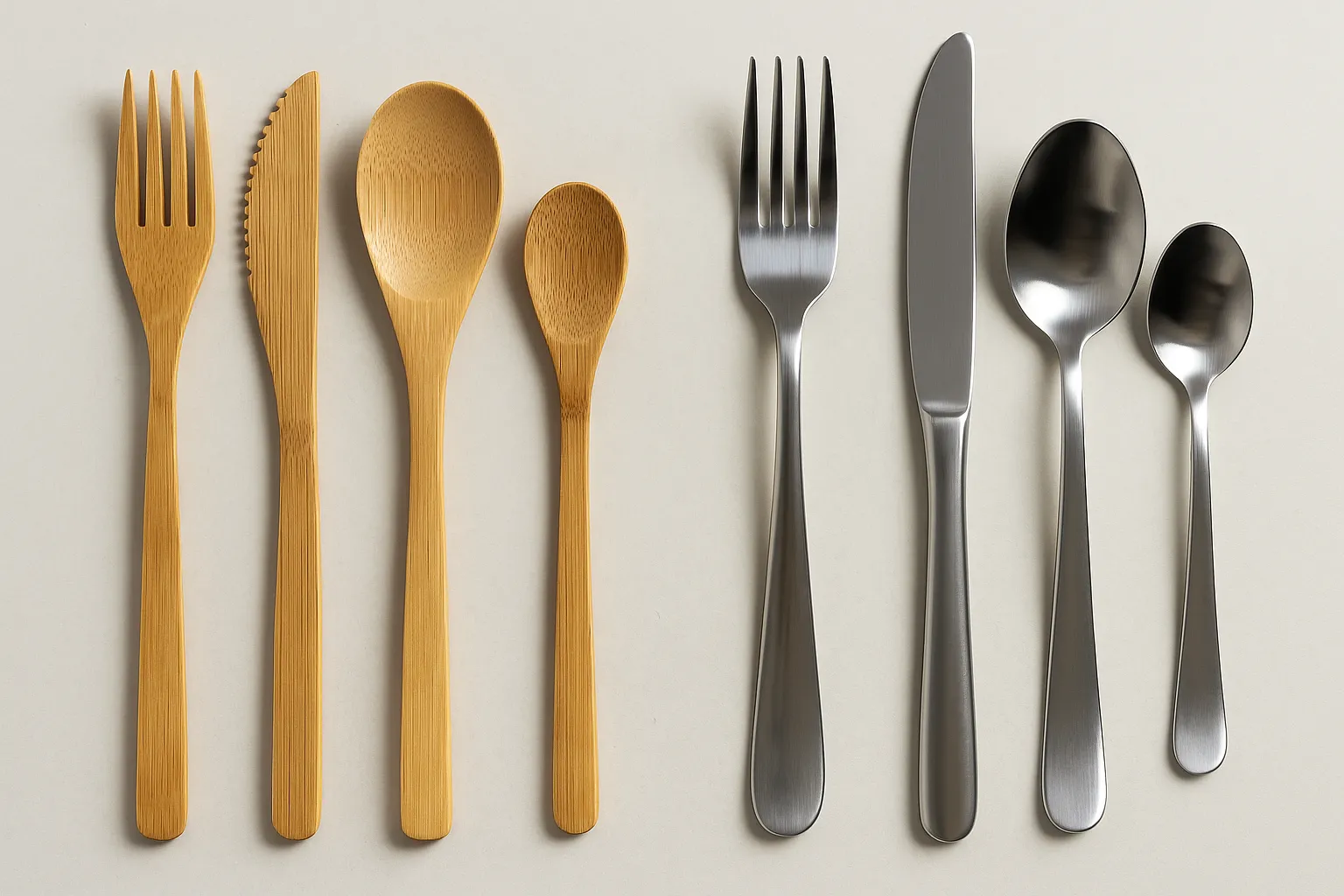
Bamboo is natural and biodegradable. Stainless steel is strong and built to last. But which is better for your needs?
In this article, we’ll break down the pros, cons, and best uses of each. Whether you care most about the planet, your budget, or your brand image, understanding these materials will help you make the right call.
What Is Bamboo Cutlery?

Bamboo cutlery is made from one of the fastest-growing plants on Earth—bamboo, which is technically a type of grass. It’s harvested, shaped, and polished into spoons, forks, knives, and more, all without the need for chemicals or synthetic additives.
What makes bamboo cutlery special?
Natural & Renewable: Bamboo grows back quickly after harvesting, with little water and no pesticides.
Lightweight but Strong: Easy to carry and use, yet surprisingly durable for most meals.
Naturally Antimicrobial: Bamboo has properties that help resist bacteria—great for clean eating on the go.
Fully Biodegradable: When disposed of properly, bamboo breaks down in a matter of months, not centuries.
That’s why bamboo has become a favorite for picnics, takeout, and sustainable event planning. It’s eco-smart and stylish all at once.
What Is Stainless Steel Cutlery?

Stainless steel cutlery is made from a strong metal alloy—mainly iron, with chromium and sometimes nickel added for shine and corrosion resistance. It’s what you’ll find in most home kitchens, restaurants, and cafes.
Here’s why stainless steel cutlery is so popular:
Non-Porous & Hygienic: It doesn’t absorb food, liquid, or bacteria—super easy to clean.
Dishwasher-Safe: Built to handle heat, water, and repeated use without warping or dulling.
Extremely Durable: It won’t crack, splinter, or soften over time. Perfect for long-term daily use.
Infinitely Recyclable: While it’s not biodegradable like bamboo, stainless steel can be melted down and reused again and again without losing quality.
It’s the go-to choice for anyone looking for long-lasting, professional-grade flatware.
Side-by-Side Comparison

Let’s break down how bamboo and stainless steel cutlery compare across the key factors that matter most—for both daily use and sustainable business sourcing:
#1 Durability
Stainless steel wins hands down for long-term toughness. It can last decades without losing function or form.
Bamboo, while sturdy enough for everyday meals, may crack, warp, or splinter over time—especially if exposed to high heat or soaked too long.
#2 Weight & Feel
Bamboo is super lightweight and gives off a warm, natural vibe that many eco-conscious users love.
Stainless steel is heavier and feels more premium—perfect for a polished, professional setting or fine dining experience.
#3 Heat Resistance
Stainless steel can handle high cooking temps, boiling water, or dishwasher cycles without a problem.
Bamboo isn’t heatproof—it shouldn’t be used in ovens, microwaves, or dishwashers. Stick to handwashing and room-temp use.
#4 Hygiene & Cleaning
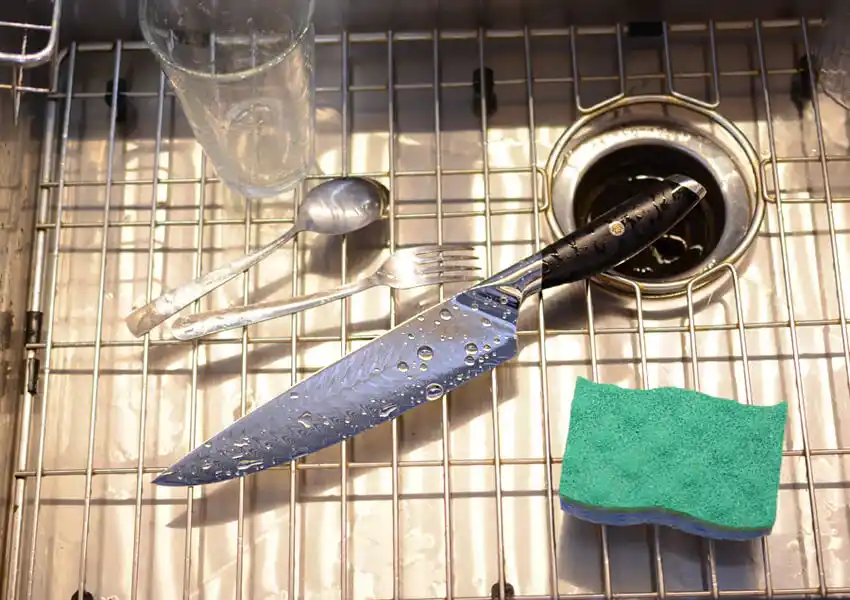
Stainless steel is non-porous and easy to sanitize—just toss it in the dishwasher.
Bamboo needs gentler care. Handwash only, dry immediately, and occasionally oil to prevent drying or cracking.
#5 Aesthetics & Tactile Appeal
Bamboo cutlery brings a rustic, earthy look that works well in cafes, parties, or outdoor dining.
Stainless steel is sleek, shiny, and timeless—great for high-end restaurants, catering, or corporate use.
Environmental Impact

When it comes to sustainability, both bamboo and stainless steel cutlery bring eco-friendly advantages—but in very different ways.
Bamboo: Naturally Green
Bamboo grows incredibly fast—some species shoot up over 3 feet a day! It doesn’t need replanting, pesticides, or much water, making it one of the most renewable resources on the planet.
After its useful life, bamboo cutlery can biodegrade in composting environments, breaking down naturally without leaving toxic residue.
Stainless Steel: Built to Last
Stainless steel isn’t biodegradable, but it is 100% recyclable—again and again—without degrading in quality. Its production does require more energy and resources upfront, but its long lifespan offsets the initial footprint.
If you’re aiming for long-term, zero-waste dining solutions, stainless steel is hard to beat.
Cost Considerations
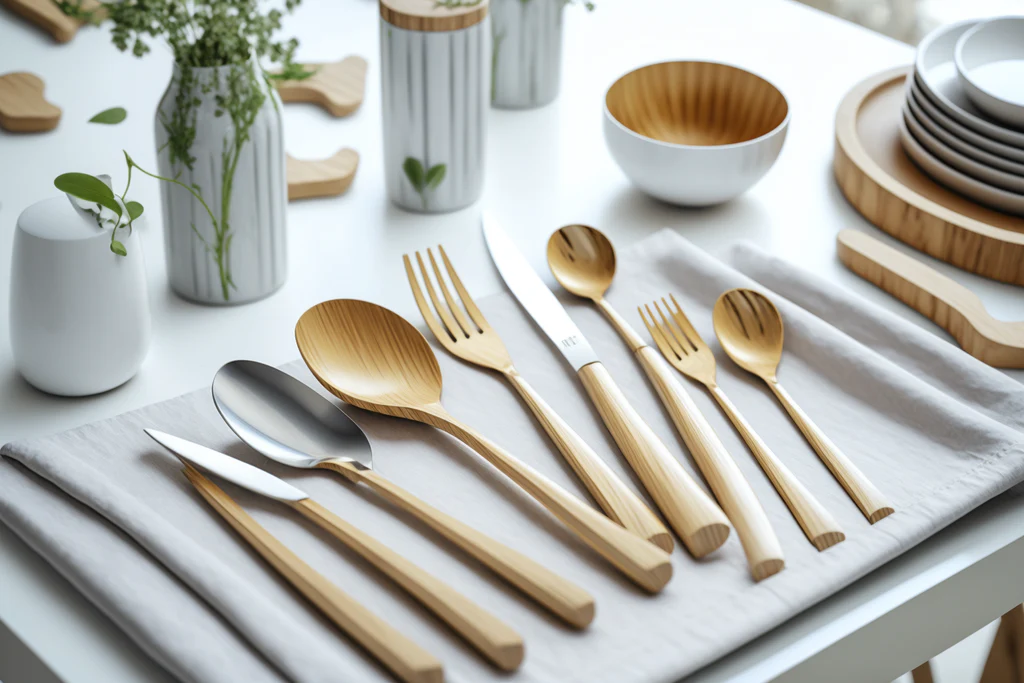
Let’s talk money—because whether you’re stocking a café or your kitchen drawer, cost matters.
Bamboo: Budget-Friendly Start
Bamboo cutlery usually comes with a lower upfront price. It’s lightweight, simple to produce, and great for bulk use—especially for events, takeout, or eco-conscious giveaways.
However, it may wear out faster, especially with frequent washing or rough use, which could mean more frequent replacement.
Stainless Steel: Investment with Long-Term Payoff
Stainless steel cutlery costs more at the start, but that’s because it’s built to last. A well-made stainless fork or knife can stick around for years—even decades—with proper care.
If you’re running a business that uses cutlery daily, the durability and washability of stainless can make it more cost-effective in the long run.
Best Use Scenarios
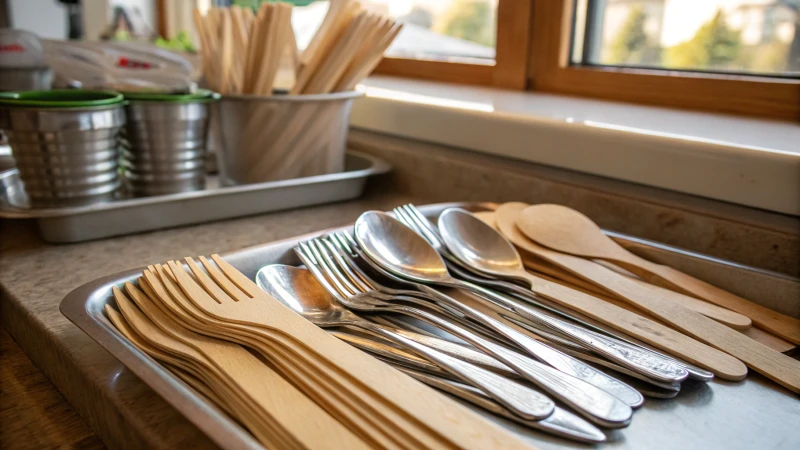
When should you choose bamboo? When is stainless steel the smarter pick? It all depends on how—and where—you plan to use your cutlery.
Bamboo: Great for Casual & Eco-Conscious Use
Outdoor events & picnics: Lightweight and biodegradable—perfect for tossing into compost afterward.
Takeout & catering: Ideal for restaurants and food trucks aiming for a green image.
Eco-conscious cafes: Appeals to customers who value sustainability.
Budget-limited setups: Low cost makes it great for bulk buying without breaking the bank.
Stainless Steel: Perfect for Long-Term & Professional Use
Formal dining: Adds elegance to table settings with a polished, premium look.
Restaurant kitchens & catering services: Built to handle heavy use and dishwashing.
Family homes: Safe, reliable, and easy to clean—no splintering or staining.
Reusable dining programs: Ideal for zero-waste initiatives and repeat use.
Hybrid Options

Looking for the best of both worlds? That’s where hybrid cutlery steps in.
Some newer designs combine bamboo handles with stainless steel tips or cores, offering a balance of eco-conscious style and long-term durability.
Laminated bamboo grips provide a warm, natural feel that’s easier to hold.
Stainless tips or inner cores give added strength, sharper edges (for knives), and heat resistance.
Often found in premium reusable sets for eco-friendly homes or sustainable restaurants.
These options are ideal if you want something that’s both planet-friendly and built to last, without fully committing to just one material. It’s a great middle ground for modern dining.
How to Choose the Right Cutlery

Not sure whether to go with bamboo or stainless steel? Here’s how to make the right call based on your needs:
1. Durability Needs
Choose stainless steel if you need long-lasting, daily-use utensils for home, restaurants, or catering.
Go with bamboo for short-term use, events, or outdoor settings where eco-disposability is key.
2. Cleaning Convenience
Prefer stainless for hassle-free cleaning—it’s dishwasher-safe and stain-resistant.
Pick bamboo if you’re okay with handwashing and occasional oiling to keep it looking fresh.
3. Aesthetics & Dining Style
Bamboo adds a rustic, natural vibe—great for casual, eco-themed meals.
Stainless offers sleek, modern appeal—ideal for formal tables and high-end presentations.
4. Sustainability Priorities
Bamboo wins for renewability and compostability.
Stainless shines in long-term reuse and recyclability, reducing waste over years.
Care & Maintenance Tips
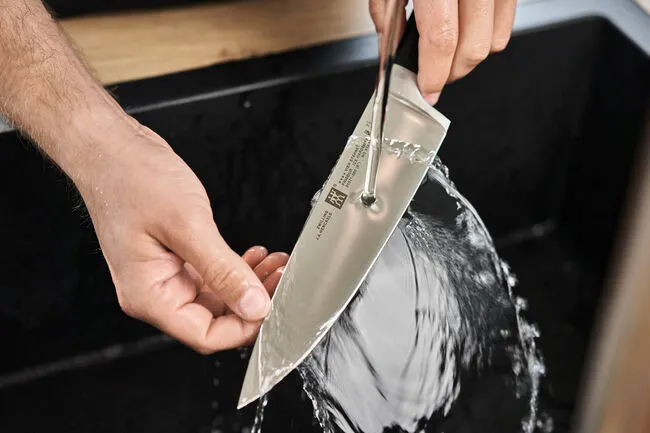
Keeping your cutlery in great shape is simple when you know how to care for each material the right way.
For Bamboo Cutlery:
Handwash Only: Rinse with warm soapy water. Avoid soaking or using dishwashers—too much moisture can cause warping or cracks.
Dry Immediately: Pat dry and air out completely before storing to prevent mold.
Oil Occasionally: Rub with food-safe oil (like coconut or mineral oil) every few weeks to maintain smoothness and prevent drying.
Store in a Ventilated Area: Keep bamboo in a dry, breathable container—no sealed plastic bags.
For Stainless Steel Cutlery:
Dishwasher Safe: Easily cleaned in most dishwashers. Place handle-down to avoid water spots and improve hygiene.
Polish for Shine: Occasionally use a stainless polish or vinegar rinse to remove cloudiness or fingerprints.
Avoid Harsh Scrubbers: Use soft sponges or cloths to prevent scratching the finish.
Store Separately if Needed: If cutlery clatters in drawers, use dividers or wraps to protect edges and finish.
Ready to Go Green with Bamboo Cutlery?
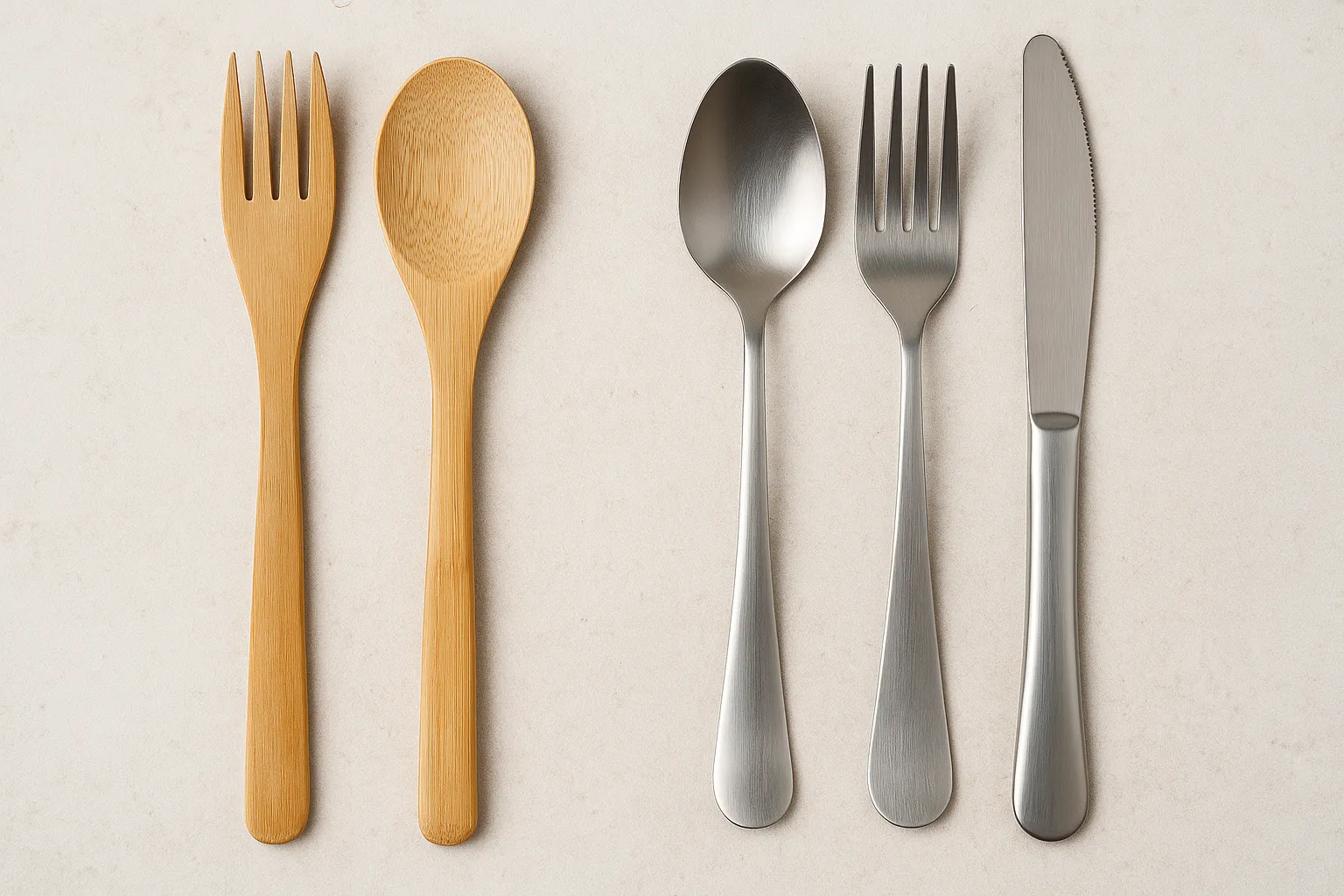
Looking for sustainable, stylish, and high-quality bamboo cutlery for your café, catering service, or retail brand? We supply eco-friendly disposable cutlery in bulk—perfect for businesses that care about the planet and presentation.
Contact us today to request a free sample or get a quick quote. Let’s make sustainable dining simple and beautiful—together.


