


In today’s world, reducing plastic waste has become more important than ever, and one way to do this is by switching to sustainable alternatives like bamboo spoons and forks.
Bamboo is not only an eco-friendly material, but it’s also durable, lightweight, and easy to work with.

If you’ve ever wondered how to make bamboo spoon and fork at home, you’re in the right place!
This guide will walk you through everything you need to know, from gathering materials to the final finishing touches.
Step-by-Step Guide on How to Make Bamboo Spoon and Fork
Materials You’ll Need

Before diving into the crafting process, gather all the necessary materials:
- Bamboo Stalks: Look for mature bamboo, around 1-2 inches in diameter.
- Tools: Handsaw (for cutting bamboo), Bolo knife or carving knife (for shaping), Sandpaper (for smoothing rough edges), A file or rasp (for finer shaping), Oil or beeswax (for finishing and protecting the bamboo).
- Optional Tools: Spokeshave or gouge for detailed finishing.
Step 1: Gather and Cut the Bamboo

Start by gathering your bamboo stalks, ensuring they are straight and free from cracks. Cut the bamboo into manageable sections, each about 12 inches long, which will be the ideal length for your spoon and fork.
Step 2: Shape the Spoon and Fork

For the spoon, begin by carving the end into a concave shape, creating a scooped surface for easy use. For the fork, carve out 3 or 4 prongs at the end of the bamboo, adjusting the width of each prong to suit your preference.
Step 3: Refine the Shape
After the basic shape is made, use a file or spokeshave to smooth out rough edges and fine-tune the design. Pay special attention to the prongs of the fork and the bowl of the spoon, ensuring they are comfortable to hold and use.
Step 4: Sand the Bamboo

Sand your bamboo pieces starting with coarse-grit sandpaper and finish with fine-grit for a smooth, polished surface. This step is crucial to avoid any sharp edges or splinters and to ensure the bamboo feels comfortable in your hand.
Step 5: Apply Oil or Beeswax

Once sanded, treat your bamboo utensils with a food-safe mineral oil or beeswax to enhance the surface and protect them from moisture. Rub the oil evenly over the utensils, ensuring that every part of the bamboo is coated.
Step 6: Final Touches
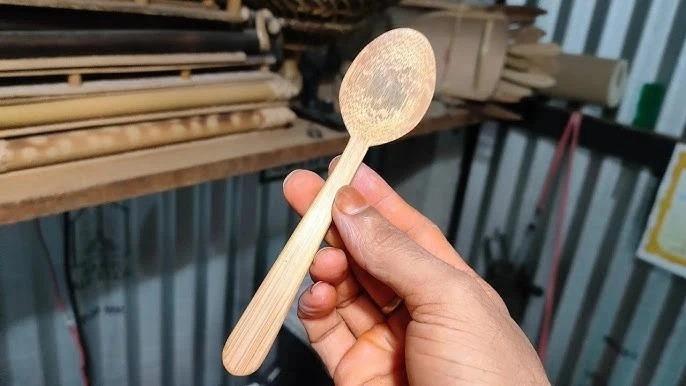
After the oil has absorbed, inspect the utensils for any imperfections. If you’re satisfied with the finish, your bamboo spoon and fork are ready for use!
FAQs About Making Bamboo Spoon and Fork
1. What type of bamboo is best for making spoons and forks?
The best type of bamboo for making spoons and forks is mature bamboo with a diameter of about 1-2 inches. Moso and Giant bamboo are commonly used due to their strength and durability.
2. Can I use regular kitchen tools to make bamboo spoons and forks?
Basic kitchen tools like a handsaw, carving knife, and sandpaper will work, but specialized tools like a bolo knife can make the process smoother.
3. How long does it take to make bamboo spoons and forks?
It typically takes 3-6 hours, depending on experience and the complexity of the design.
4. Can I use my homemade bamboo spoon and fork for hot foods?
Yes, bamboo is heat-resistant, but avoid soaking them in hot water for extended periods, as this could weaken the bamboo.
Conclusion

Crafting your bamboo spoon and fork is a rewarding and sustainable project. By using bamboo, a renewable resource, you create durable utensils while reducing plastic waste.
Ready to try it? Gather your tools and start crafting your eco-friendly kitchenware today!


