


Natural Oil Finishes for Wooden Tableware

Natural oils are some of the safest and most effective ways to protect wooden bowls, spoons, and cutting boards. They soak into the wood, add moisture resistance, and keep surfaces smooth without creating a heavy film. Here’s a quick look at the most trusted options and when to use each one.
Mineral Oil
Mineral oil is one of the simplest, most beginner-friendly finishes. It’s clear, scent-free, food-grade, and very easy to apply. It penetrates deep into the wood to prevent drying and cracking, making it perfect for cutting boards and everyday utensils. Because it doesn’t harden, you’ll need to reapply it regularly.
Walnut Oil
Walnut oil is a plant-based finish that offers richer, deeper protection than mineral oil. It hardens slightly as it cures, giving wooden tableware a warm tone and durable feel. It’s a great natural option—just be mindful of potential nut allergies for customers or food-service settings.
Raw Linseed Oil
Raw linseed oil (made from flax seeds) is fully natural and becomes food-safe once cured. It seeps into wood fibers and forms a smooth, protective layer. The trade-off is drying time—it can take days or weeks to fully cure. Avoid boiled linseed oil, which contains chemical additives and is not food-safe.
Tung Oil
Tung oil is prized for its strength and water resistance. It’s a drying oil, meaning it hardens into a protective barrier that helps wooden tableware stand up to frequent washing and use. Once fully cured, it’s food-safe and long-lasting, making it ideal for bowls, utensils, and serving boards.
Coconut Oil
Coconut oil is a natural finish that stays stable without going rancid. It’s easy to apply and gives wood a soft, moisturized look. Because it sits closer to the surface, it requires more frequent touch-ups, but it’s a gentle and safe option for casual use or decorative items.
Wax and Combined Finishes
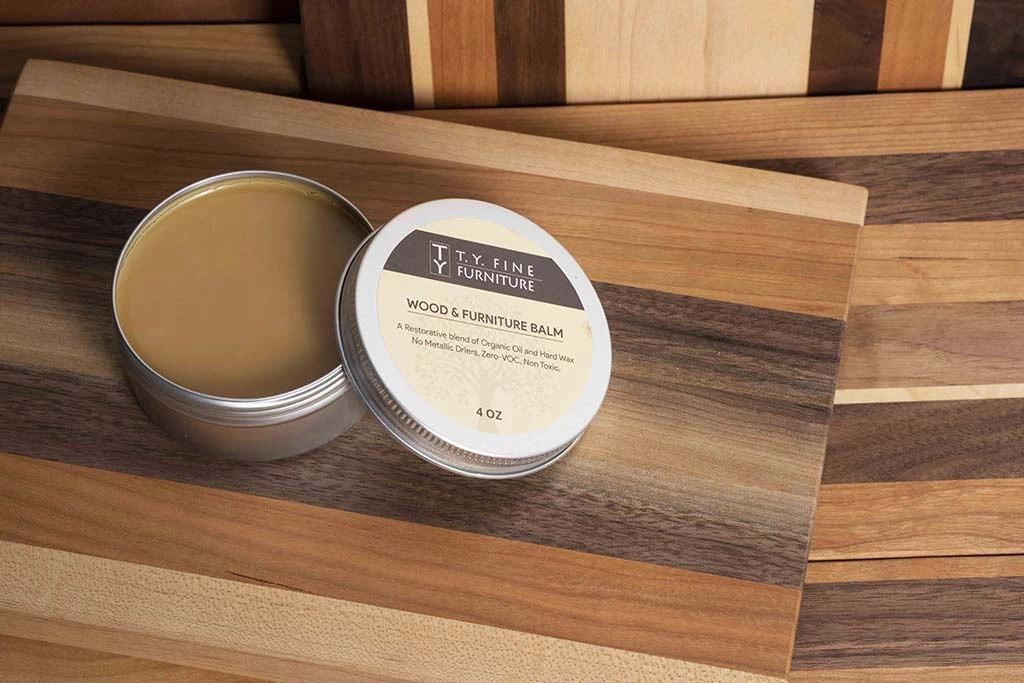
Wax finishes are a great way to give wooden tableware a smooth, polished feel while adding a modest layer of protection. They’re often paired with natural oils to create a richer, longer-lasting finish that’s still completely food-safe.
Beeswax
Beeswax is one of the most traditional choices for wooden bowls, spoons, and cutting boards. It creates a soft sheen and adds light moisture resistance without sealing the wood too tightly. It’s gentle, natural, and easy to reapply, making it ideal for tableware that sees frequent use.
Carnauba Wax
Carnauba wax comes from the leaves of the carnauba palm and is known for being harder and more water-resistant than beeswax. When used on wooden tableware, it produces a glossy, durable surface that stands up well to handling and washing. It’s often chosen when you want a tougher, longer-lasting finish that’s still plant-based and food-safe.
Blended Finishes (Oil + Wax)
Many woodworkers and manufacturers prefer using blends of oil and wax because they offer the best of both worlds. The oil penetrates deep to nourish and strengthen the wood, while the wax forms a protective top layer that enhances color and texture. These blends are easy to maintain and ideal for bowls, utensils, and serving boards that need both beauty and durability.
Film-Forming Finishes & Safety
Film-forming finishes create a protective coating on the surface of the wood rather than soaking into it. While some are food-safe once cured, others should be avoided on items that come into direct contact with food.
Shellac
Shellac is a natural resin made from the secretions of the lac bug. Once fully cured, it becomes food-safe and offers excellent water resistance. It gives wooden tableware a warm, glossy appearance and is commonly used for serving bowls, decorative pieces, and items that won’t be cut on or heavily scraped.
When to Avoid Stronger Films (like Polyurethane)
Finishes such as polyurethane, varnish, or lacquer create hard, durable coatings—but they aren’t good choices for cutting boards, butcher blocks, or utensils that touch food directly. These films can chip or peel over time, especially when cut with knives, leading to contamination and safety concerns. They’re better reserved for furniture or decorative woodwork, not items used for food prep.
Finishing Specific Items
Different wooden tableware needs the right finish to stay safe and last longer. Choosing the correct protective layer keeps your items looking great and working well every day.
Cutting Boards & Butcher Blocks

These surfaces get heavy use and frequent knife contact. That’s why penetrating oils—such as mineral oil, raw linseed oil, or tung oil—are ideal. They soak deep into the wood, help prevent moisture damage, and won’t chip or peel like surface coatings can. Avoid film-forming finishes here, since they can crack under cutting and create unsafe flakes. Regular reapplication keeps boards clean, smooth, and stain-resistant.
Bowls & Utensils

Bowls, wooden spoons, and spatulas benefit from finishes that both condition and protect. Oil-and-wax blends are excellent because the oil nourishes the wood while the wax adds a gentle seal that repels water and food residue. This combo maintains wood beauty and keeps items safe for serving and eating.


