


BBQ skewers are more than just sticks — they’re the secret to fast, flavorful grilling. Whether you’re cooking meat, veggies, seafood, or even fruit, skewers make it easy to portion, flip, and serve everything with ease.
But not all skewers are created equal. The type of skewer you choose can affect how evenly your food cooks, how easy it is to turn on the grill, and whether your meal sticks or slides right off. Picking the right one helps you grill smarter — and tastier. Let’s break down your options and help you find the perfect skewers for your BBQ needs.
Types of Skewers
| Type | Features | Best For | Tips |
|---|---|---|---|
| Wood / Bamboo | Disposable, budget-friendly, lightweight | Fruits, veggies, light meats | Soak before use to prevent burning |
| Metal / Stainless Steel | Reusable, durable, conducts heat well | Frequent grilling, heavier meats | Use insulated handles or gloves |
| Flat / Wide Skewers | Stable, prevents spinning, even grilling | Chunky meats, slippery vegetables | Flip easily with control |
| Round Skewers | Classic, simple design | Light food, uniform items | Rotate carefully to avoid slippage |
| Double-Pronged / Heavy-Duty | Secure hold, long-lasting, sturdy | Steak, lamb, mixed meal kabobs | Ideal for shareable portions |
Choosing the right skewer starts with knowing what’s out there. Skewers come in different materials and shapes, each offering unique pros and cons depending on what you’re grilling. Let’s break it down:
By Material
Wood / Bamboo / Hardwood Skewers

These are your classic disposable skewers — affordable, easy to find, and perfect for casual BBQs or parties. Bamboo skewers are the most common choice, though some premium versions use harder woods for better durability.
Best for: veggies, fruits, or small cuts of meat.
Key tip: Always soak wooden skewers in water for at least 30 minutes before grilling. This helps prevent burning or snapping mid-cook. They’re not ideal for reuse but are perfect when you want easy cleanup.
Metal / Stainless Steel Skewers
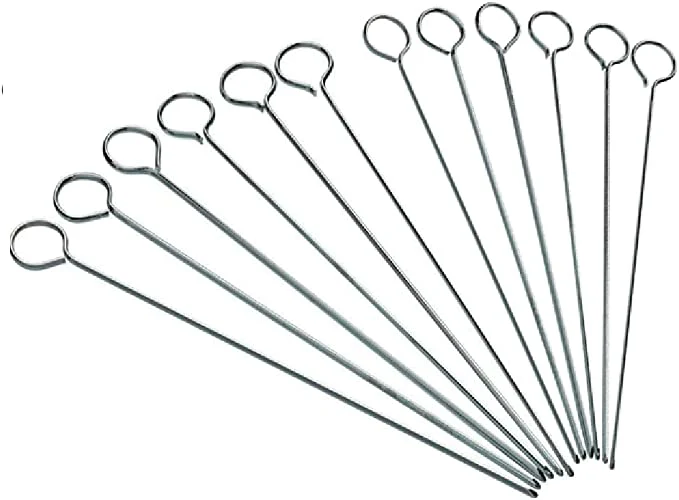
If you grill often, metal skewers are a solid investment. They’re reusable, rust-resistant (especially stainless steel), and they conduct heat — helping food cook from the inside too.
Best for: frequent grillers, larger meat cuts, or mixed kabobs.
Watch out: Metal skewers get hot. Use heat-resistant gloves or choose skewers with insulated or looped handles for safer turning.
Bonus: No soaking needed. Just wash, dry, and reuse.
By Shape & Design
Flat or Wide Skewers

Flat skewers keep food from spinning when you flip them. This gives you better control and more even cooking — especially useful for slippery or chunky foods like chicken thighs, mushrooms, or sliced veggies.
Best for: meats and foods that tend to roll or slide.
Why it matters: You get better grill marks and avoid uneven char.
Round Skewers / Classic Round Sticks

Round skewers are the most traditional style — especially when made from bamboo or metal. They’re great for simple meals like veggie sticks, marshmallows, or shrimp.
Best for: light or uniform ingredients that don’t need constant flipping.
Pro tip: Rotate gently to avoid breakage (in wood) or food slippage.
Double-Pronged or Heavy-Duty Skewers

Need something more secure for larger or heavier ingredients? Double-pronged or extra-long skewers are your go-to. They hold food steady and distribute heat well across wide cuts.
Best for: lamb chunks, steak cubes, sausage, or meal-size kabobs.
Tip: These work especially well when you’re doing full-meal skewers with meat, veggies, and starch — everything stays in place from grill to plate.
Choosing Skewers for Your Needs
Not all skewers work the same — choosing the right one makes grilling smoother and safer.
Go Bamboo or Wood for Light Grilling
These are perfect for small bites like shrimp, mushrooms, cherry tomatoes, or marshmallows. They’re inexpensive and easy to toss after use. Just remember to soak them in water for 20–30 minutes before grilling to avoid charring.Metal Skewers for Bigger Jobs
For chicken thighs, lamb chunks, or anything that needs more cooking time, metal skewers are your best friend. They’re reusable, conduct heat, and help cook food evenly from the inside out.Match Skewer Shape to the Job
Flat skewers keep food from spinning when you flip. Double-pronged skewers grip heavy meats or mixed items better. Round skewers are fine for simple snacks or soft foods.
Grilling Best Practices for Skewers

Even the best skewers need the right grilling habits. Here’s how to get juicy, evenly cooked results:
Soak Wooden Skewers
Always soak wood or bamboo skewers for at least 20 minutes to prevent burning on the grill.Leave Some Space
Don’t pack ingredients too tightly. Small gaps between pieces let heat flow and cook everything evenly.Turn Regularly
Rotate skewers every couple of minutes for even browning — especially important when mixing meats and veggies on one stick.Use Caution with Metal
Metal skewers get hot fast. Always use tongs or wear gloves when flipping. And clean them after each use for safety and long life.Plan for Skewer Length
Match your skewer size to your grill space and portion needs. Too long = awkward flipping. Too short = not enough food per stick.
Ready to Choose the Right Skewers?

Whether you’re grilling at home or buying in bulk for your food business, we’ve got the perfect BBQ skewer options for every need. Let us help you pick the best match by shape, material, or usage.
Contact Us Today for Expert Support!
FAQs
How to cook skewers on a barbecue?
Preheat the grill, oil the grates, place skewers over medium‑high heat, and turn regularly. For mixed items (meat + veggies), rotate every few minutes so everything cooks evenly.
How long do you barbecue skewers?
Plan on 10–15 minutes total cooking time for most kebabs. Meat chunks may need about 10–12 minutes, vegetables 8–10 minutes, depending on size and grill temperature.
How long should you soak skewers before barbecue?
If you’re using wood or bamboo skewers, soak them in water for at least 20–30 minutes (some recommend up to 1 hour or overnight) to prevent burning on the grill.
What to put on skewers for a barbecue?
You can skewer many foods: cubed meats (chicken, beef, lamb), seafood (shrimp), veggies (peppers, onions, mushrooms), or even fruits. Alternate items for mixed kebabs — just cut into similar-size pieces so they cook evenly.


